Repetition and Rhythm – The Art of Hanging Art

Repetition and Rhythm – The Art of Hanging Art
Hanging art is about much more than getting a picture straight. It’s a balance of aesthetics, rhythm, and personality—a way to create harmony in a space where the walls become part of the story. Whether you have a single print you love or a collection of paintings, the way you hang them can transform the entire feel of a room. Here’s how you can use repetition and rhythm as tools when decorating with art.
Rhythm in the Room – Guiding the Eye
When we talk about rhythm in interior design, we’re really talking about movement and balance. The eye should be able to travel naturally from one element to the next without interruption. You can achieve this by repeating shapes, colors, or spacing between artworks.
If you have several pieces in similar tones, hang them in an even rhythm—with consistent spacing and height—so they form a visual line. This creates calm and structure. On the other hand, you can build a more dynamic rhythm by varying sizes and placements while keeping a unifying theme that ties everything together.
Repetition Creates Harmony
Repetition is one of the most effective ways to bring cohesion to a space. It can appear in frames, colors, or subject matter. Three artworks with similar shapes or hues can feel like a single composition, even if they differ in style.
A good trick is to choose one common element—black frames, botanical themes, or geometric lines—and let it repeat throughout. This gives a sense of unity, even when the pieces are diverse. The repetitions act as the beat, while the variations bring life and energy.
Læs også:
Hang in Series – or Build a Gallery Wall
There are many ways to arrange art, but two classic approaches are series and gallery walls.
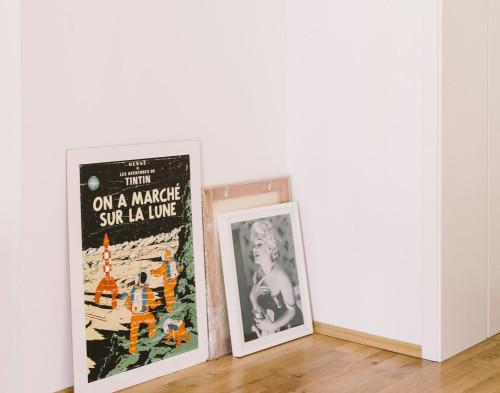
- Series work best when your pieces are connected by theme or style. Hang them in a straight line—horizontally above a sofa or vertically along a staircase. The result is clean and elegant.
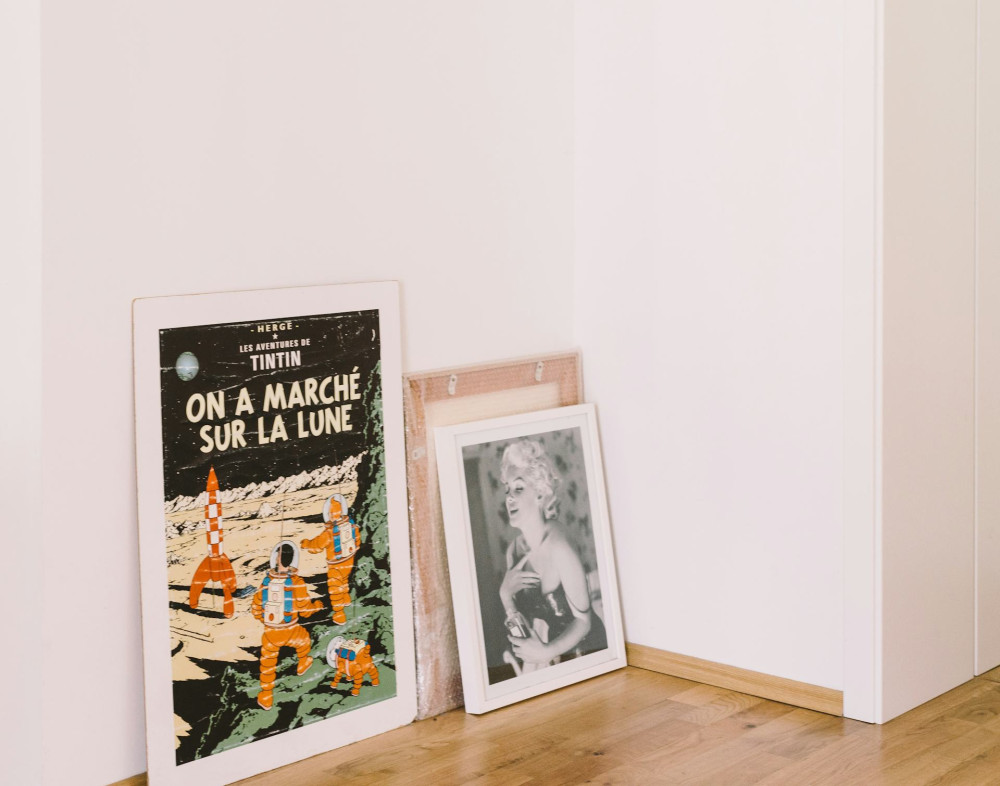
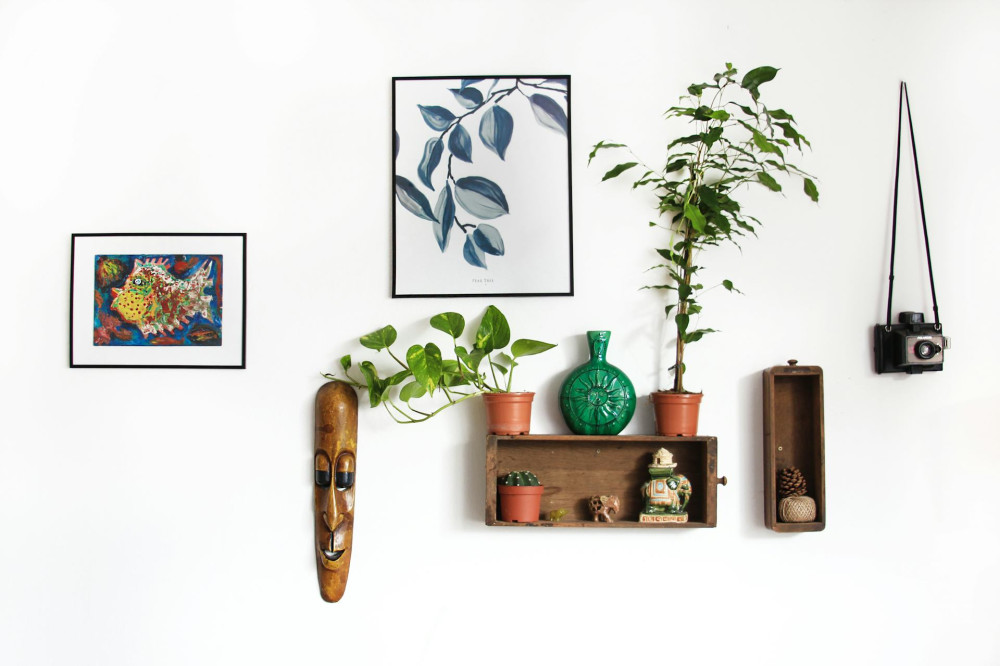
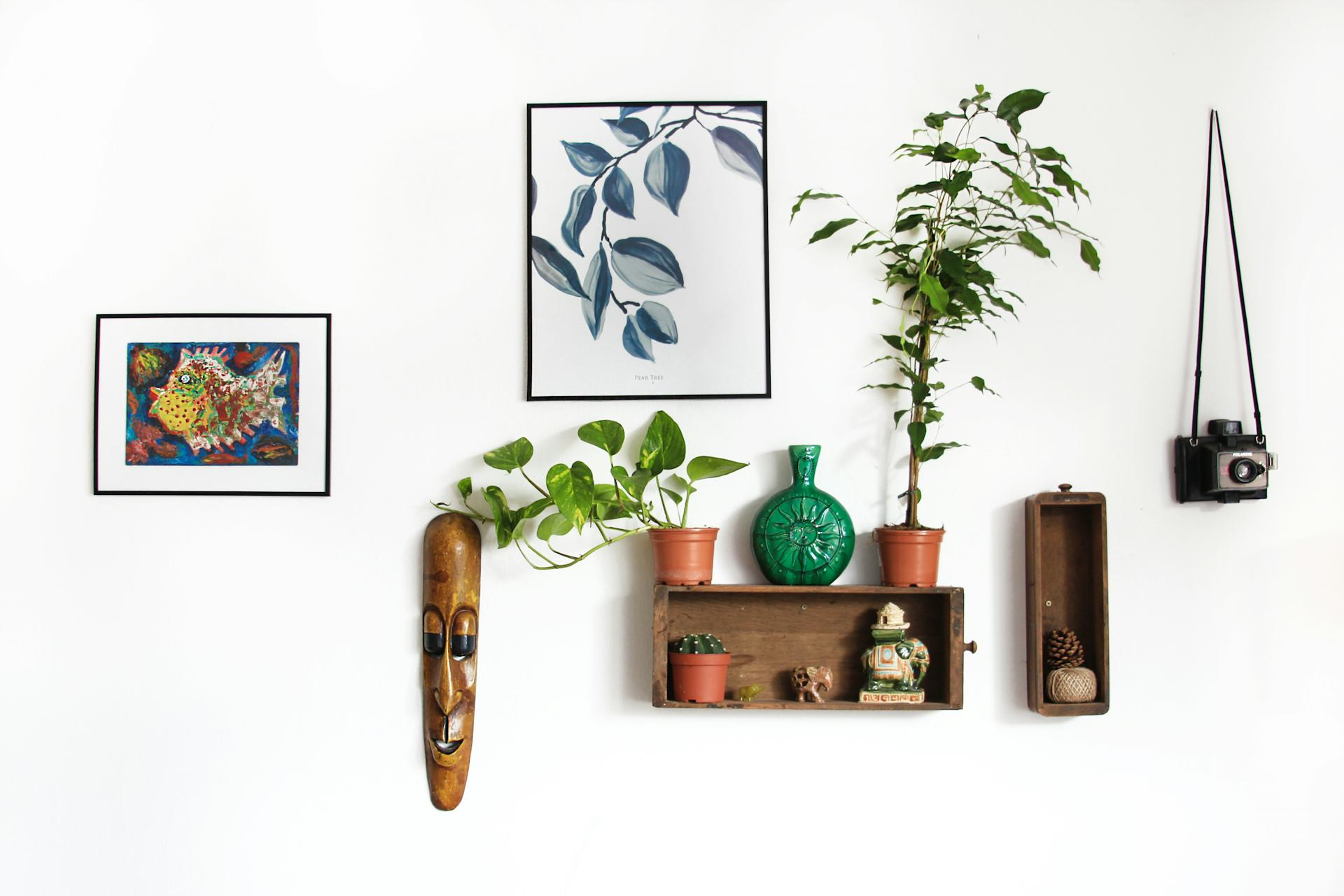
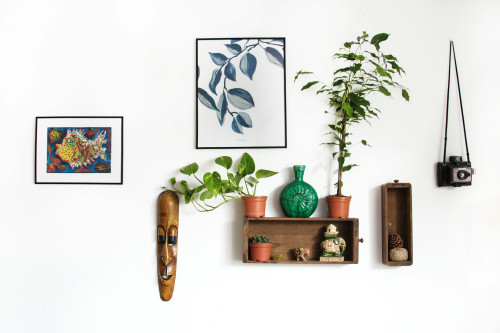
- Gallery walls are more playful and personal. You can mix sizes, styles, and frames, yet still create rhythm through repeated colors or spacing. Lay the pieces out on the floor first to find a balance between density and breathing room before committing to nails in the wall.
Height Matters More Than You Think
A common mistake is hanging art too high. As a rule of thumb, the center of the artwork should be at eye level—around 57 to 60 inches from the floor, which is the standard used by many U.S. galleries and museums. This makes the art feel naturally integrated into the space rather than something you have to look up at.
When hanging multiple pieces together, think of them as one composition. Keep the spacing consistent—typically 2 to 4 inches apart, depending on size. This consistency creates rhythm and calm, whether you’re hanging two pieces or ten.
Balance Between Wall and Furniture
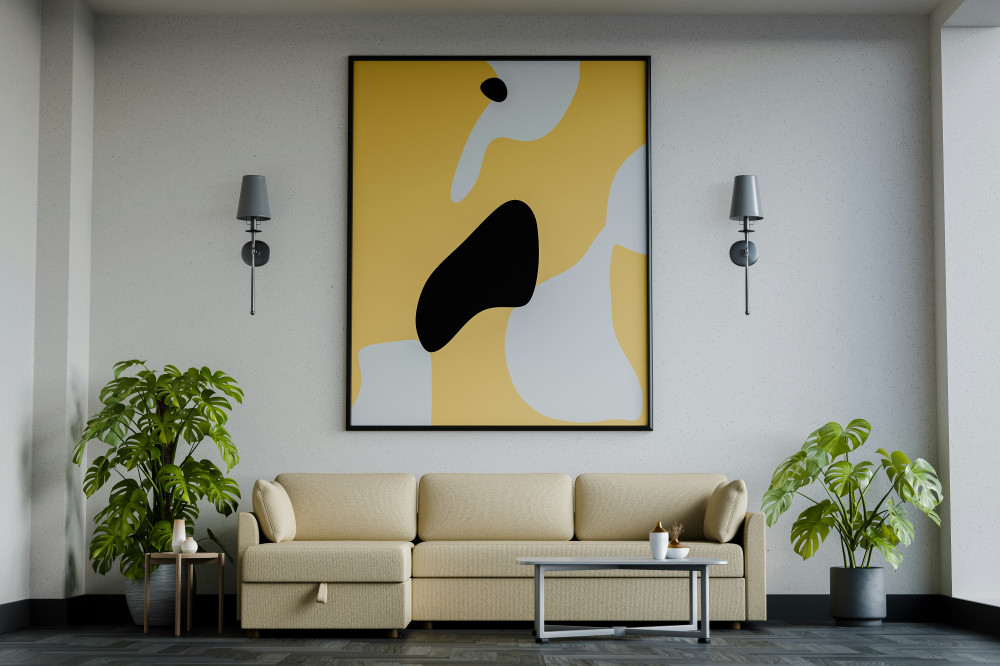
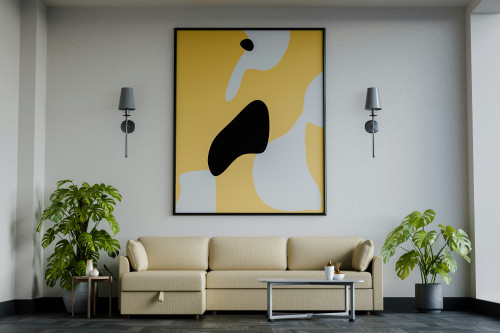
Art should work in harmony with the furniture around it. A large painting above a small console can feel overwhelming, while a tiny print on a big, empty wall can get lost. Think in proportions: the artwork should complement the furniture, not compete with it.
If you’re hanging several pieces, let their combined width roughly match the width of the furniture below. This creates a natural rhythm in the room, where wall and furnishings support each other instead of clashing.
Leave Room to Breathe
Just like in music, pauses matter. A wall doesn’t need to be filled to feel interesting. In fact, empty space can give the eye a place to rest and make each artwork stand out more. Consider leaving some walls nearly bare—it creates contrast and makes your decorated walls more striking.
Art as Part of Everyday Life
Hanging art isn’t just an aesthetic exercise—it’s a way to shape atmosphere and identity in your home. Working with repetition and rhythm is ultimately about finding your own balance between order and spontaneity. Art shouldn’t just be seen—it should be felt, every day.
Læs også: